Summer windows
Humidity, condensation and foggy glass: a Windsor homeowner's guide
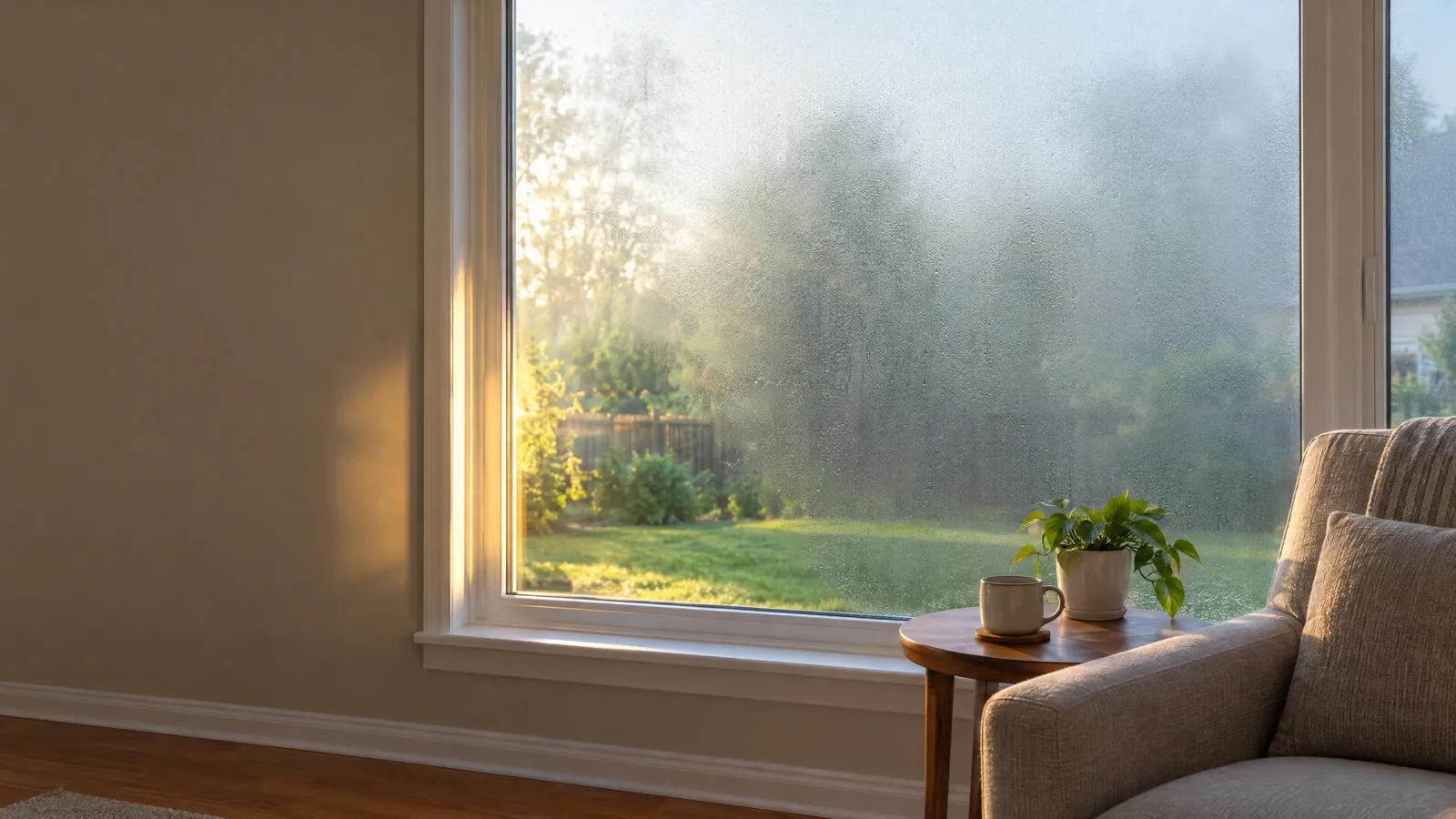
Fog on the outside of the glass on a humid summer morning is dew, and on newer glass it's normal. Fog on the room side, mostly in winter, comes from indoor moisture meeting cold glass, and it's fixed in the house. Fog between the panes is a blown seal: the thermal glass has failed, and no wiping or dehumidifying will clear it. Wipe both sides to find out which one you've got.
Three kinds of window fog and what each one means
Windsor windows fog in three places, and each means something different. A dry cloth sorts them out: wipe the room side, then the outside if you can reach it safely. Whatever's left is between the panes.
| Where the fog is | When it shows up here | What it means | What to do |
|---|---|---|---|
| Outside surface | Humid summer mornings | Dew. The glass is keeping the house and the weather apart | Nothing. It burns off |
| Room-side surface | Cold snaps, steamy kitchens and bathrooms | Indoor air is carrying more moisture than cold glass can handle | Ventilate, dry the air, let air reach the glass |
| Between the panes | Any season, worse on some days | A blown seal. The sealed unit has let moisture in | Call a glass pro |
Why Windsor windows fog on the outside on summer mornings
Picture a July morning in Windsor. The air's already thick at breakfast, the lawn's soaked and you can't see the yard through the patio door. Mornings here are usually muggy even when the afternoon dries out, and that's when outside fog turns up.
Overnight the outer pane cools off, and with the air conditioning running inside, nothing warms it back up. When humid morning air touches glass colder than its dew point, water condenses on it, the way a cold can of pop sweats on the porch. Once the sun reaches the glass, it's gone.
Outside dew means the glass is doing its job
Newer windows show outside dew more than old single glass does. In a sealed unit, especially one with a low-E coating, the outer pane is cut off from the house, so it follows the outdoor temperature. A new window that fogs on the outside on a muggy morning isn't faulty. It's keeping inside and outside apart, which is what you paid for.
Patio doors: where people notice it first
Sliding patio doors are usually where people see it first: often the biggest glass in the house, right at lawn level, and in use here from spring through October. It's the same harmless dew. If the door itself sticks or won't lock, that's a job for sliding door repair.
Winter condensation inside: humidity, airflow and cold glass
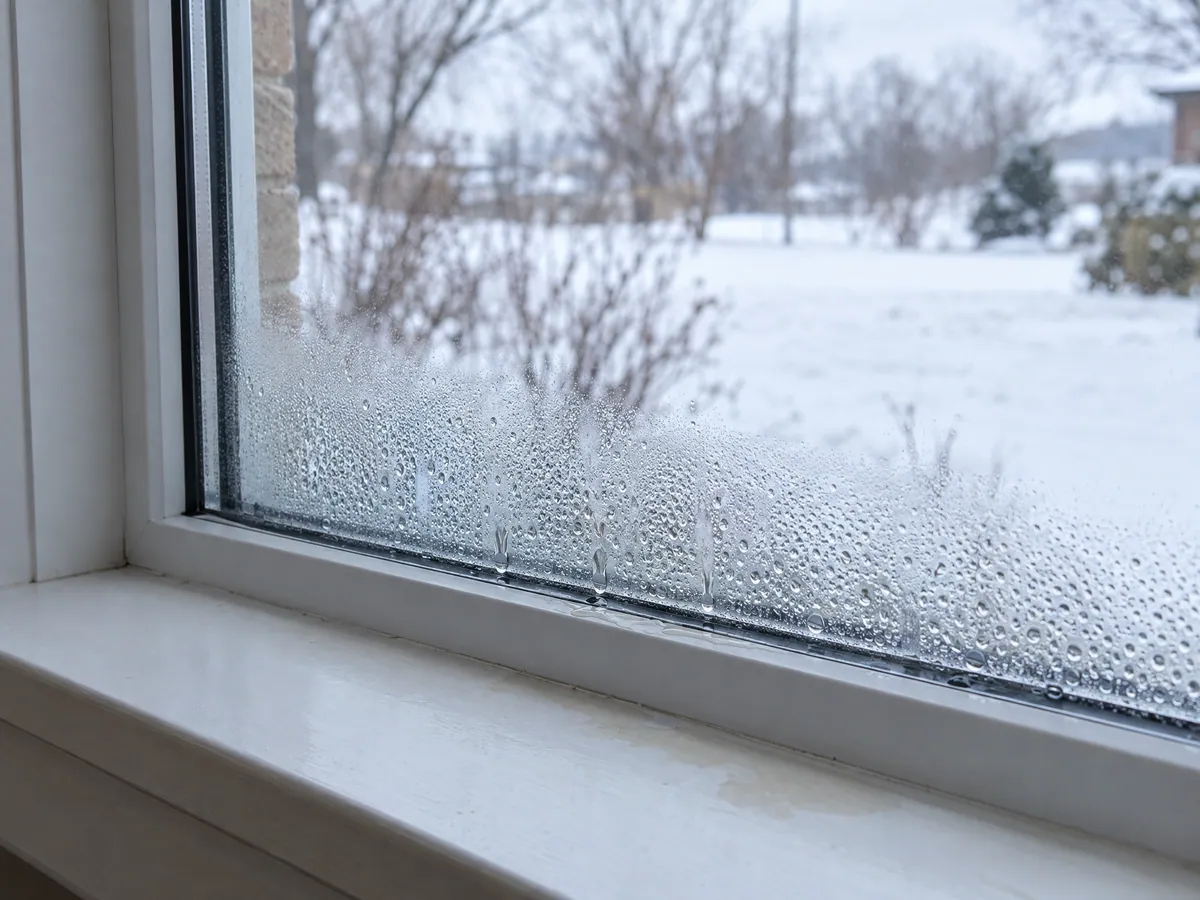
Winter is the secondary season for window sweat here. Windsor's winters are mild for Canada, yet on a cold night the room side of the glass is still the coldest surface in the room. Indoor air picks up moisture from showers, cooking, laundry and breathing, and when it touches that glass the water comes out, low on the pane first.
This kind wipes off, because it's on your side. It's mostly a house problem, though the window can make it worse. Natural Resources Canada notes that poor installation "may cause condensation, cold drafts or even allow water to leak into your home", and that low-E coatings and insulated frames mean "reduced condensation on the glass".
Fog between the panes: a failed seal, not the weather
Most modern windows have sealed units, which plenty of people in Windsor-Essex call thermal glass: two or more panes held apart around the edge, with a sealed, dry space between them. When the edge seal lets go, damp air gets in, and you've got a blown seal.
What it looks like:
- haze or droplets you can't reach from either side
- fog that comes and goes as the temperature changes but never fully clears
- over time, a milky film or white streaks near the edges that stay even on dry days
You can't wipe it away and a dehumidifier won't touch it. It's the one kind of window fog that needs a glass pro. The options, side by side:
- Defogging cleans and dries the space between the panes. It can bring the view back on some units.
- A new sealed unit replaces the glass package and keeps your frame, sash and hardware. See foggy sealed units.
- A new window makes sense when the frame is failing too. The repair-or-replace guide walks through that call.
Sun, heat and air conditioning: can they wear out seals?
A fair question in a city with Ontario's longest, most humid summers. The honest answer: it's possible, and nobody has proven it.
What's known: Windsor needs more cooling than Toronto, so glass here spends a lot of the year with sun on the outside and air conditioning on the inside, and the edge seal sits between the two. It's reasonable to think the daily swing adds some stress, especially on south- and west-facing windows.
What isn't known: how much. There are no published Windsor figures on seal failure, and no reliable local number for how long sealed units last. Seals also give out for ordinary reasons, like age and installation. If someone tells you the summer has ruined every window in the house, ask them to show you the failed units one by one.
Practical fixes: ventilation, dehumidifiers, window coverings and screens
Outside dew needs nothing. For sweat on the room side:
- Run the bathroom and kitchen fans while you shower and cook, and for a while after.
- Run a dehumidifier in the basement through the humid months. Cool, damp basements feed moisture to the rest of the house.
- Let air reach the glass. Blinds and heavy curtains shut tight against a cold window trap moist air behind them. Leave a gap.
- Tighten the sash. A window that doesn't close snugly lets humid air into the frame, where it condenses out of sight. New weatherstripping is a small fix.
- Keep the screens in shape, so you can open up the house on cooler, drier evenings. A torn one keeps windows shut all summer, and window screen repair is about as small as window jobs get.
None of this touches fog between the panes.
After floods and wet summers: basement windows and moisture
Heavy summer rain has flooded basements in Tecumseh and east Windsor more than once, and thunderstorms come through Windsor more often than Toronto. After a wet stretch, basement windows take the worst of it.
- Water in the window well usually means a blocked or missing drain, or ground sloping toward the house. That's a drainage fix first.
- Water around the frame, not on the glass, shows as staining on the wall below or a damp sill. A rusted or rotted basement frame is usually a replacement rather than a repair.
- Sweat on basement glass all summer is the cool, damp basement talking. A dehumidifier does more good than new glass.
- Photos for the insurer come before cleanup, if a flood did damage.
Replacing a basement window in the same opening usually doesn't need a City of Windsor building permit, but making it bigger or adding a walkout does. Confirm on the City's building permit page before you order anything.
When to call a glass pro
Call when fog sits between the panes, when water shows up around the frame instead of on the glass, or when a sash won't close tight. A single blown seal is worth asking about.
We aren't a glass shop. We connect you with one. Send a photo of the whole window and a close-up of the fog through the quote form, and we'll pass it to an independent local glass pro who does sealed-unit work. The call you get is from someone who wants the job, and they'll tell you whether it's a defog, a new unit or a new window. If it comes to a new window, replacement windows explains the job. More local guides are on the guides page.
Frequently asked questions
Why do my new windows fog on the outside when the old ones didn't?
Because the new glass insulates better. In a sealed unit, the outer pane is cut off from the house, so on a humid morning after a cool night it stays cold enough for dew to form. Old single glass was warmed or cooled by the room, so it stayed drier outside. Outside dew on new windows isn't a defect. It clears when the sun hits it.
Should windows have condensation on the inside in summer?
Not usually. In summer the room side of the glass is normally warm enough to stay dry. If it's wet, look for a big moisture source nearby: a shower without the fan, a pot boiling on the stove, laundry drying indoors, a damp basement. If the wet spot won't wipe off, it's between the panes, which is a blown seal. Foggy sealed units covers that.
Does running the air conditioning cause window condensation?
It can add to dew on the outside. Air conditioning keeps the glass cool, so when muggy morning air touches the outer pane, moisture condenses on it. That's harmless and doesn't hurt the window. Air conditioning actually dries indoor air, so it doesn't cause sweat on the room side. Whether years of it stress the edge seals is possible but unproven.
Will a dehumidifier stop my windows sweating?
It helps with sweat on the room side, especially in basements and in a house that runs damp all summer. It does nothing for dew on the outside, which is just the weather, or for fog between the panes, which is a failed seal. If the dehumidifier is running and the fog still won't wipe off either side, the sealed unit is the problem.
What does a blown seal look like up close?
Haze or droplets you can't touch from either side of the glass. The fog tends to come and go with the temperature without fully clearing, and over time it can leave a milky film or white streaks near the edges that stay even on dry days. If a dry cloth on both faces changes nothing, you're looking at a blown seal, not condensation.
Can a flooded window well damage the basement window?
It can. Water standing against a basement window pushes at the frame and the seal around it, and it can find its way inside, especially if the frame is old, rusted or rotted. Clear the well's drain and fix the grading first. Then have the frame checked. A pro can say whether it needs sealing, a new unit or a new window.